

Montreal has quietly become Canada's pizza capital, and if you're paying attention, you've probably noticed something unmistakable: the rise of wood-fired pizza. With the Canadian pizza market projected to grow from $1.004 billion in 2023 to $1.277 billion by 2028, it's clear that Canadians are increasingly investing in quality pizza experiences. But what makes wood-fired pizza so different from conventional methods?
The Heat Factor: Temperature Makes All the Difference
Wood-fired ovens operate at temperatures between 700-900°F (370-480°C)—significantly hotter than conventional gas or electric ovens, which typically max out around 500°F (260°C). This extreme heat creates that signature charred crust with a crispy exterior and airy, soft interior that pizza lovers crave. The pizza cooks in 60-90 seconds instead of several minutes, which means the toppings stay fresh and don't dry out.

Flavor Development: The Wood Makes a Difference
The wood itself contributes to the taste. When you use premium hardwoods like oak or beech, they impart a subtle smokiness that enhances the overall flavor profile without overpowering delicate ingredients. It's the difference between a pizza that tastes good and one that tastes like an experience. Conventional ovens simply can't replicate this depth of flavor.
Crust Quality and Dough Preparation
Wood-fired pizza demands respect for the craft. The high heat requires patience during dough fermentation—often 24-72 hours—to develop the right texture and flavor complexity. This slow fermentation process creates digestibility and depth that quick-rise doughs simply can't achieve. Conventional pizza often relies on faster preparation methods that sacrifice these qualities for speed.
Ingredient Integrity: Quality Becomes Non-Negotiable
When your cooking time is under two minutes, you can't hide behind heavy sauces or processed ingredients. Every element has to be premium. Fresh mozzarella, quality tomatoes, artisanal cured meats, and locally sourced vegetables become non-negotiable. This constraint actually forces restaurants toward better practices, while conventional pizza can sometimes mask lower-quality ingredients with longer cooking times and heavier seasoning.
Experience Balboa Pizza in Old Montréal
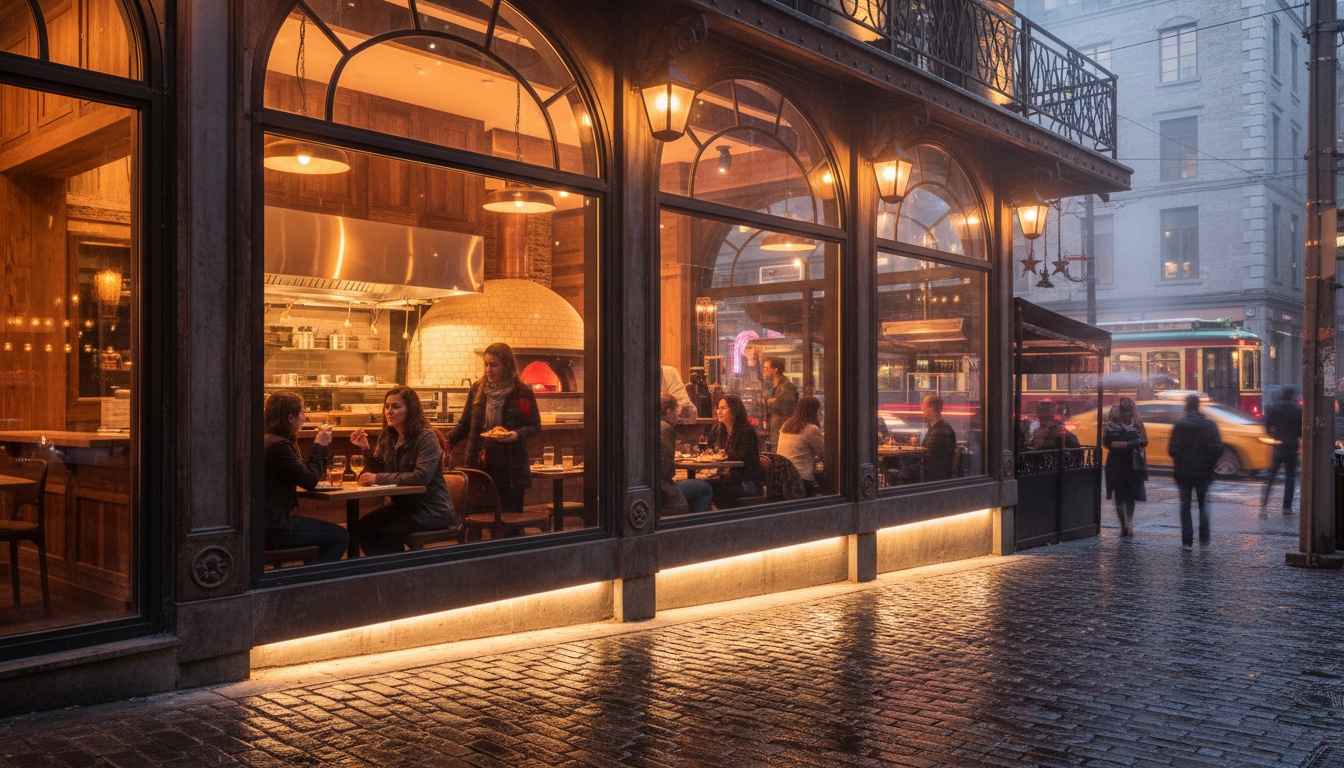
At Tomahawk Group, we understand that Montreal's dining scene thrives on authenticity, craftsmanship, and community. Balboa Pizza, our wood-fired pizzeria launching in Old Montréal, embodies everything we've discussed. We're creating a high-design space where dough-focused techniques meet modern aesthetics. Every pizza that comes out of our wood oven is treated as an expression of craft, using premium ingredients and respectful fermentation methods.
Whether you're a local, a visitor, or planning your next group dining experience, Montreal's wood-fired pizza scene deserves your attention. It represents something genuine in a landscape often dominated by shortcuts. The wood-fired pizza renaissance in Montreal isn't just about the food—it's about remembering why we gather around tables in the first place.


